![]() |
| Above: simplified diagram of ancient Egyptian woven seat pattern |
Saturday, 3 September 2022
Woven Seats in Ancient Egypt (Part 1)
Thursday, 1 September 2022
REFURBISHING A TIRED OLD STOOL
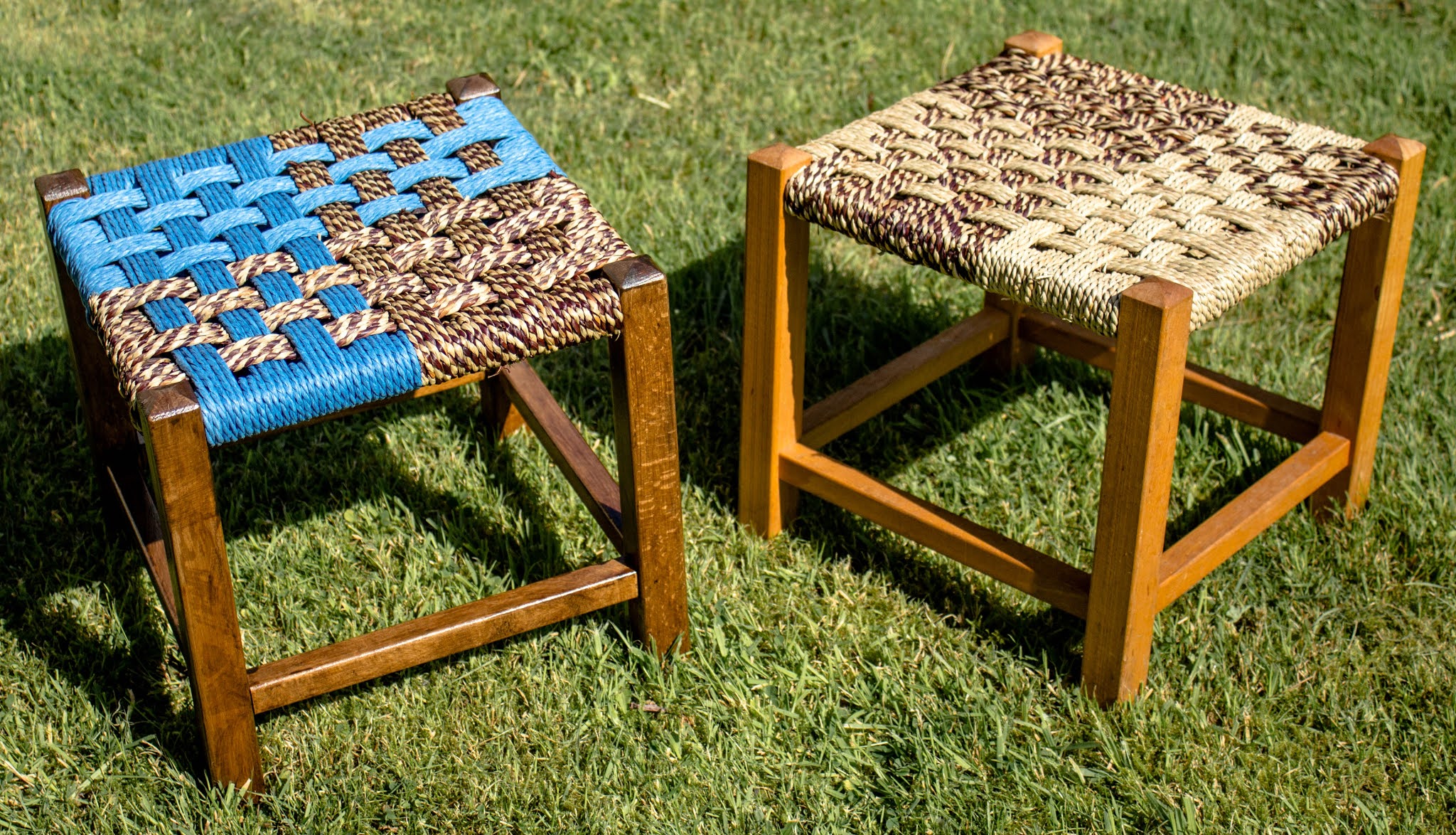
It's rather nice, though, to have a customer who wants something different. This stool had belonged to her son when he was young, and had bright green polycord wearing away on its surface. She told me that now that he's an adult he prefers calm, muted colours, and provided me with a tin a grey paint to cover the frame. This took a bit longer than I thought as it required several coats to get a nice, smooth surface.
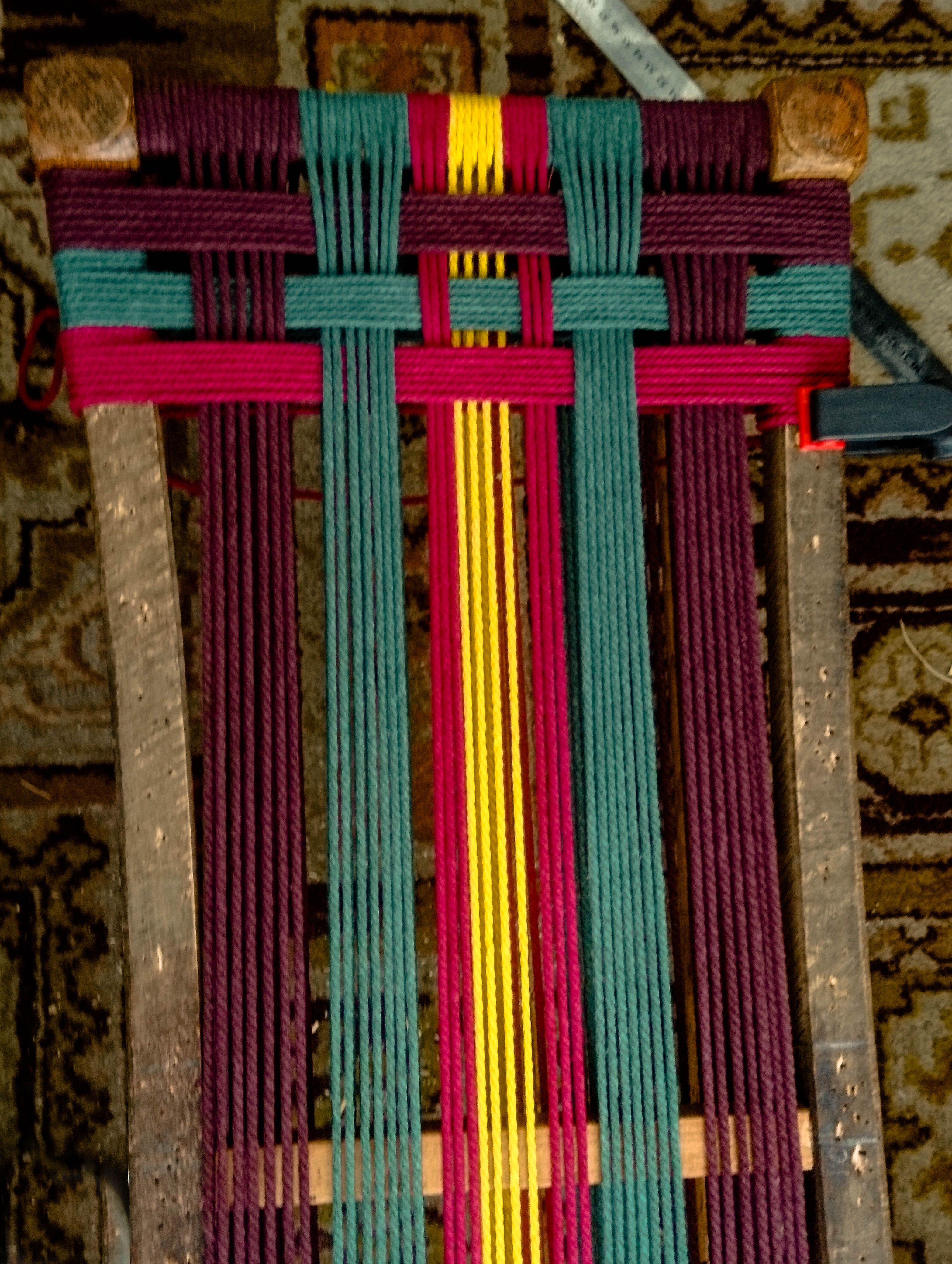
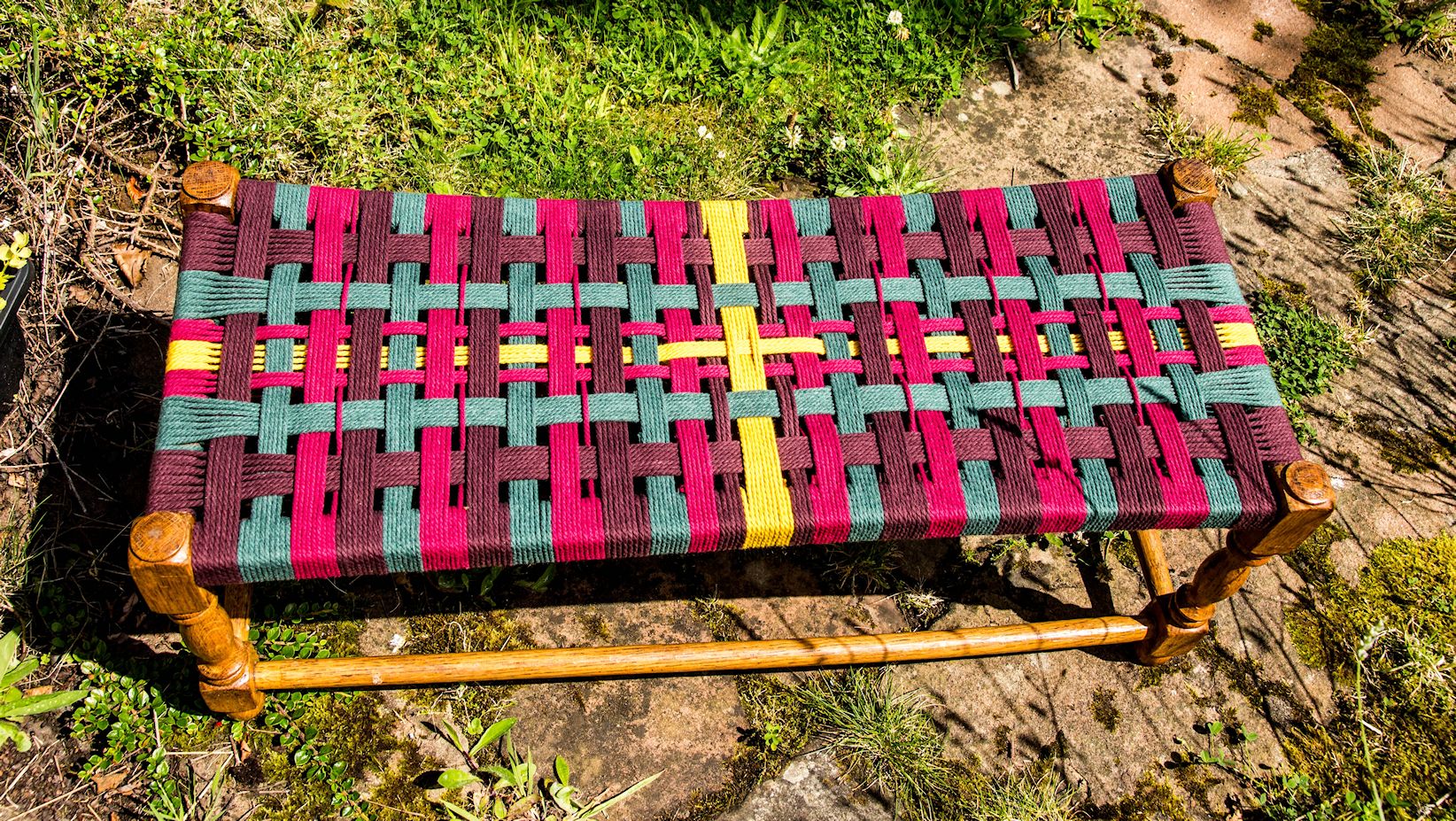
She asked if I had any grey cord, so I showed her our lovely silvery flax cord, which is so soft and nice to work with. The only trouble with this stuff is that it stretches a bit in use, so can't really be used on its own on a seat. But this gave me an opportunity to try something I'd had ticking over in my mind for a while: a hybrid seat, with warp strands in a tough cord and soft flax cord for the weft. I suggested Danish cord for the warp.
I used the "no-nails" Danish cord pattern, which can be found in our bestselling book. This relies on the strands of cord looping over themselves at the sides, rather than being fixed to L-shaped nails underneath (as in the more common Danish cord seats) or being wrapped all the way round (as in traditional styles like the cheuquerboard pattern.
Wrapping the cord over itself creates a pleasing pattern of little knots round the edges, as you can see in the photos.
I'm quite pleased with the result, and it's a new design for me.
CLICK BELOW TO BUY THE SITUPON SEATS DANISH CORD BOOK!
SitUpon Seats Instruction Books
(Scroll down the page when you get there.)
CLICK BELOW TO BUY DANISH CORD
Saturday, 16 July 2022
An unusual long stool
![]() |
| (Above) The stool prior to starting work on it |
Monday, 14 February 2022
THE RUSH SEAT
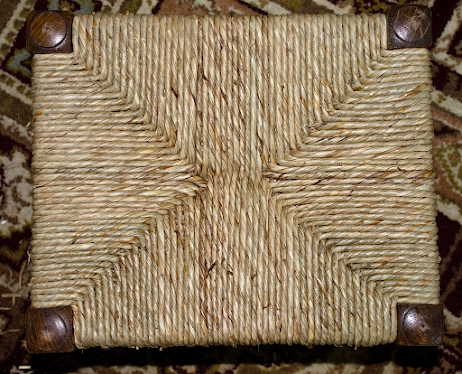
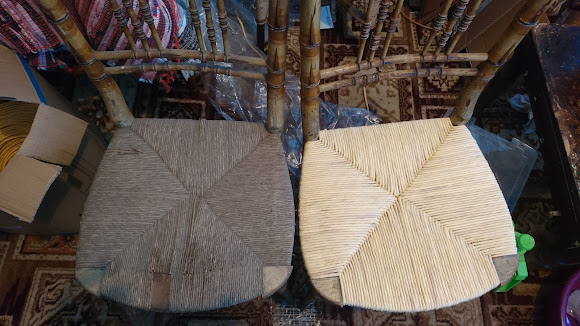
Evidence of rush seating turns up throughout history. The Vikings almost certainly used this method, and in mediaeval Italy simple rush-seated ladderback chairs were commonly used. Strangely, considering that the best rushes grow in England, there's no direct evidence of rush-seating in Britain before the 17th century, though it's quite likely it was used before this.
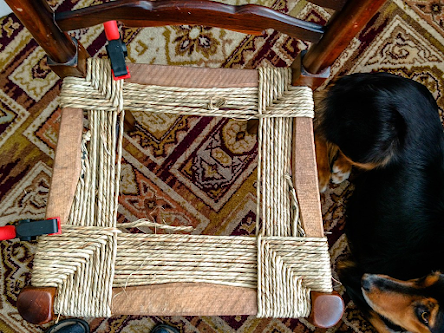
The pattern is simple, and must have been discovered numerous times by different people throughout history. It's simply a matter of creating a twisted rope of some local material, and wrapping it in a particular way around a wooden frame. You simply attach it to the inside of the frame, and work your way round, over and under, over and under, until you reach the centre of the seat. This produces a strong, but comfortable seat.
Thursday, 25 March 2021
CANED CARVERS
I've just finished these two lovely old cane chairs. The backs were still in reasonable condition, but the seats were worn out and needed recaning.
It's been a real pleasure of a job to do. The hardest part was matching the colour of the seats to the old, dark cane of the backs.
Chair cane is, of course, VERY glossy and hard on the front, and most wood treatments just tend to slide off, or, worse still, come off on people's clothes, so one has to be careful. When it does stay put, it tends to be very transparent and pale. But I think I've finally found the solution.
I'd never tried water-based varnish on cane before, and didn't think it would stick, so I did numerous experiments with offcuts of ready-woven cane until I found the perfect combination. In the end I used a couple of layers of dark, spirit-based woodstain, plus, on top, another couple of layers of water-based, medium brown, gloss varnish. It's a good colour, and a nice looking finish. The customer was delighted!
The other interesting thing about these seats is that there are the same number of holes along the back and the front, although, like most chairs, the seats are trapeziod – i.e., wider at the front. It's much commoner to find there are more holes at the front, which leaves the seatweaver with the problem of making the sides neat, where extra strips of cane have to share holes with the usual horizontal ones.
Having the same number back and front makes a much cleaner looking pattern. You hardly notice the slight distortion as the verticals splay out towards the front. I think it's a much more sensible solution, and if I were making my own chairs from scratch, I'd definitely do this.
Monday, 24 August 2020
WOODEN STOOL KITS ARE BACK!
I know a lot of people have been missing our lovely wooden stool kits recently, which we couldn't get for a few months. At last, a new batch of wooden frames is on its way, so if you want one – or some! – get your orders in, as they're sure to sell out soon.
All these kits now come with our updated, new edition instruction books – either The SitUpon Stool Book, or The SitUpon Rush Pattern Book.
I'll be updating the photos on the KITS PAGE as soon as the wooden frames arrive later this week.
Please note, we are still awaiting new stock of cotton cord, but there's still a selection of nice colours if you want a kit using this material.